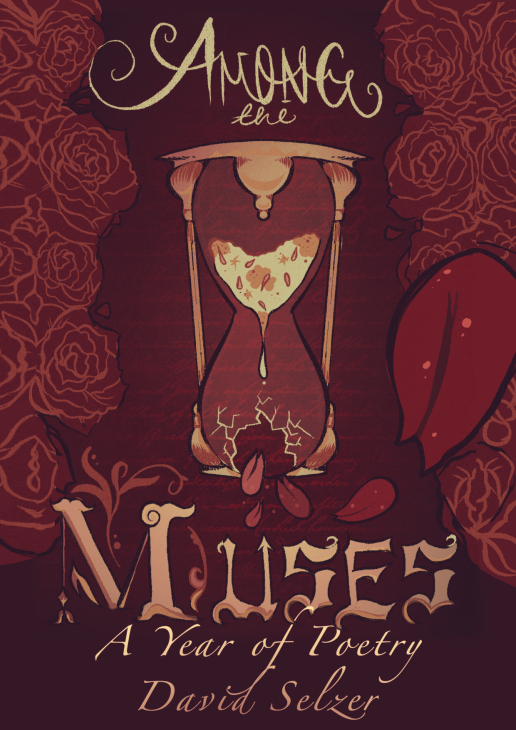
‘AMONG THE MUSES A Year of Poetry’: Hi-Hat Press NEW YORK

David Selzer By David Selzer5 Comments2 min read1.1K views

My latest book of poems ‘AMONG THE MUSES  A Year of Poetry’ has been published this month by HI-Hat Press New York and is available from Amazon.
The following is an edited extract from my introduction to the book:

All of the poems in the collection were written in 2025, and are printed, for the most part, in the chronological order in which they were written. 2025 was the year in which I became 83 – and a year when public narratives seemed especially dominated by certain men in their ‘70s and ‘80s, my contemporaries more or less: the usual suspects, of course, like Netanyahu, Putin, Trump. Many of the poems in the collection have already been published on the website and all will be in due course. What is special about the poems in ‘AMONG THE MUSES…’ is their unique juxtaposition.

Hi-Hat Press was started in 2023 from a long-held conviction shared by its two editors, the acclaimed American poets Harvey Lillywhite and Eileen Silver-Lillywhite, that the world is measurably poorer without strong poetry in it. They felt that some strong poetry is, currently, going unpublished.

Harvey Lillywhite’s has written the foreword:

Among the Muses: A Year of Poetry gathers a wonderful sequence of poems written across a single year by the distinguished British poet David Selzer, composed in his eighty-third year. His poems search with the clarity and range of a lifetime’s attention. Reflecting on gardens and birdsong, on empire, memory, art, and the calamities of our modern world, the poems find a common ground we must all settle into.

David’s voice is reflective and sharply observant. A robin singing through winter weather, the quiet rituals of a long-lived home, the small dramas of neighborhood wildlife all appear alongside meditations on poets, dictators, wars, and vanished worlds. His poems travel widely, from the Dee Estuary and the Wirral Peninsula to Manhattan, Prague, Gaza, and the American plains. But they anchor in the touch of the known world of everyday life.

What unites his work is a patient and humane intelligence. David writes with wit and moral seriousness. He has a storyteller’s eye for detail. He knits into the lines of his verse History and the present moment. The result is equal parts personal journal, cultural meditation, and his testament to endurance.

Wise and quietly radiant, Among the Muses is the work of a poet who has spent decades listening carefully to the world and still has much to say.


Cover design and art work by Evie Chapman


CHANCE INTIMATIONS

Rain is crossing the estuary from the west

in impenetrable shrouds of grey.

Not far from the old quay, against dark reeds,

a Great Egret is poised – its whiteness statuesque,

its yellow beak ominously bright in the gloom.


As we leave for home in a stygian downpour,

windscreen wipers keeping time, the bird,

which we first saw on the Nile, and now here

near the Irish Sea, is still luminous.


How far we have travelled in thirty years –

some of us on wingbeats across seas;

some of us mostly in our heads and hearts!


As I write a Wood Pigeon is fluting

in the chimney – its short, sad roundelay

wistful, hinting at at least one more spring.


A SOUVENIR

On one of Mazzaro’s gritty beaches

a cable car below Taormina,

I found a piece of Etna’s lava

the size of a goujon, a sinker,

a bobbin, smoothed only a little

by modest Mediterranean tides;

fetching five euros in the tourist shops but

unseen by the landlords of expensive

loungers and umbrellas, by Russian tourists,

Thai masseuses, Indian peddlers. No doubt

geologists could date it exactly

but I prefer the inexactitudes

of possibilities. Perhaps it was spewed

when the city walls of Catania

diverted the flow into the harbour

or when the Carthaginians were thwarted

from capturing Syracuse, or when Aeneas,

in his wanderings, approached Sicily.


Dark grey pumice, heavy, pockmarked like

moon craters, still smelling distantly

of the sea, it rests on a mantelpiece

next to a bit of driftwood slight as balsam,

shaped like a small fish, found on Deganwy beach

by Afon Conwy – stolen goods, contraband,

freighted with histories.


A TOUCH OF SPRING

Driving down Boathouse Lane, Parkgate, at the bend

is the first view of the estuary.

This unseasonal February day, lit

with a spring-like sunshine, the vast reed beds

are golden filled with silver pools and lagoons

high tides have made. On the Welsh shore the narrow,

sea-going channel is pallid – above

Halkyn Mountain is a gentle lilac,

as are the Clwydians beyond, and east

Peckforton and Beeston on the Cheshire Plain.


Outside the town the RSPB car park,

on the site of the old sea-water baths,

is overwhelmed with birders – their serious

gear and sharp elbows – here to film or photo

feathered raptors devour water voles

fleeing the rising waters shoreward.


Later, putting out the bins in the mild dusk,

all the gardens of our neighbourhood

are filled with the singing of blackbirds.


THE COOTS’ NEST

The coots have built their nest among lily pads

on the park’s ornamental pond: too far out

for foxes, too high for water rats;

an aquatic castle keep of twigs,

subtle and elegant engineering.


Next time we pass a tiny beak is cracking

the latte-coloured carapace from within.

Instinctively the chick emerges,

shakes itself, teeters down to the water,

swims, returns, squeaking for food, both parents

immediately attendant – with their dark

plumage, the knightly blaze on the long,

horny shield of their beaks, their ancient

English name, named for their call, ‘Cut…cut’.


In summer the nest will have become flotsam,

the chick will have matured, the lilies flowered:

as sure as logic, as fugitive as blooms.


ABSENCES

Yesterday, while I was reading in the shade,

a dragonfly came from nowhere, landing on the lawn

in the sun near my chair. Light coruscated

on the extraordinary gossamer

of its wings, the polished bronze of its body.

A sudden breeze stirred the pages of my book.

The dragonfly rose skyward soundlessly.


At opposite corners of our roof, starlings,

for a quarter century and more,

made their nests in gaps in the soffits.

We knew their curious whistles, the scrabbling

beneath the eaves, the soft chirruping.


This May wild bees nested in one of the gaps.

Dark prancers, they have filled a patch of sky

with a low humming, a murmuration

of glades, of groves.