Tag Archives

Trump

‘AMONG THE MUSES A Year of Poetry’: Hi-Hat Press NEW YORK

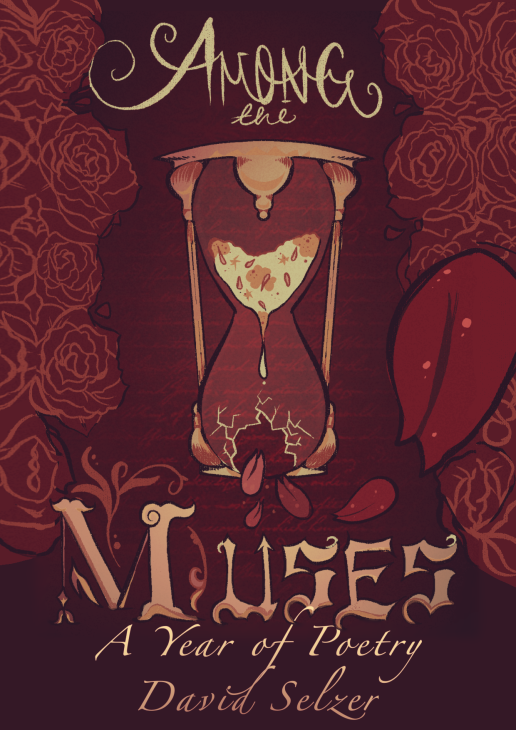
My latest book of poems ‘AMONG THE MUSES  A Year of Poetry’ has been published this month by HI-Hat Press New York and is available from Amazon.
The following is an edited extract from my introduction to the book:

All of the poems in the collection were written in 2025, and are printed, for the most part, in the chronological order in which they were written. 2025 was the year in which I became 83 – and a year when public narratives seemed especially dominated by certain men in their ‘70s and ‘80s, my contemporaries more or less: the usual suspects, of course, like Netanyahu, Putin, Trump. Many of the poems in the collection have already been published on the website and all will be in due course. What is special about the poems in ‘AMONG THE MUSES…’ is their unique juxtaposition.

Hi-Hat Press was started in 2023 from a long-held conviction shared by its two editors, the acclaimed American poets Harvey Lillywhite and Eileen Silver-Lillywhite, that the world is measurably poorer without strong poetry in it. They felt that some strong poetry is, currently, going unpublished.

Harvey Lillywhite’s has written the foreword:

Among the Muses: A Year of Poetry gathers a wonderful sequence of poems written across a single year by the distinguished British poet David Selzer, composed in his eighty-third year. His poems search with the clarity and range of a lifetime’s attention. Reflecting on gardens and birdsong, on empire, memory, art, and the calamities of our modern world, the poems find a common ground we must all settle into.

David’s voice is reflective and sharply observant. A robin singing through winter weather, the quiet rituals of a long-lived home, the small dramas of neighborhood wildlife all appear alongside meditations on poets, dictators, wars, and vanished worlds. His poems travel widely, from the Dee Estuary and the Wirral Peninsula to Manhattan, Prague, Gaza, and the American plains. But they anchor in the touch of the known world of everyday life.

What unites his work is a patient and humane intelligence. David writes with wit and moral seriousness. He has a storyteller’s eye for detail. He knits into the lines of his verse History and the present moment. The result is equal parts personal journal, cultural meditation, and his testament to endurance.

Wise and quietly radiant, Among the Muses is the work of a poet who has spent decades listening carefully to the world and still has much to say.


Cover design and art work by Evie Chapman


A MANIFEST DESTINY

Like stopped clocks narcissists can be guaranteed

to get something right at least once: witness

re-naming the Gulf of Mexico, the Gulf

of America – as the Romans named

the entire Mediterranean,

from Massilia to Carthage,

Levant to the Pillars of Hercules,

‘Mare Nostrum’. Even that advocate

of the USA’s imperial

expansion, and subjugation of Stone Age

peoples, President Thomas Jefferson –

slave owner, miscegenator, gardener,

and one of the Founding Fathers – accepted,

without demur, the 1550 map

that named the gulf El Golfo de México.

It might, after all, have been named for Cuba,

that elongated island – which Jefferson

coveted – that lies like a detached tongue

in the Gulf’s gigantic now poisonous maw.


The largest river that flows into the Gulf

is the Mississippi.  The ninety miles

from the mouth to Baton Rouge is known as

‘Cancer Alley’, and comprises mostly

poor, black parishes. Oil refineries

and petrochemical works discharge

their liquid waste containing PCBs,

dioxins, lead, mercury and phosphorus

into The Big Muddy, which then informs

the Gulf’s warming waters, steeped in oil

from the flotillas of drilling platforms –

mostly American – that float like scum.


Most marine species are dying, except for

oil-marinated Yellow-Fin Tuna

caught by trawlers out of Galveston, shipped

to US canneries and restaurants –

like old Saturn eating his children. So,

quite right and proper that the Union’s

47th President should fess up

and give the crime scene a fitting name.


CLUELESS IN GAZA

For Drew Steele


Two old men, one with a raggedy spray tan,

the other an industrial comb-over,

sat facing representatives of the world’s

media outlets, who appeared to believe

that public pronouncements by the one

with the orange face and the white hands

were to be understood literally.


Behind them a high-banked

coal fire appeared to blaze and crackle

in the hearth of a mantelpiece laden

with gilded objects. The older man

had – to ‘Stupéfaction Mondiale’,

as the headline in Libération put it –

just outlined his real estate plan

for one hundred and forty square miles of land

in the so-called Middle East, a plot

about the size of Las Vegas but with

a population two thirds the size.


The younger man smirked briefly. Few noticed

that, in the proposal for the final

solution to Gaza’s long history of

mayhem, the number of Gazans cited

was at least half a million fewer

than the estimate fifteen months before.

But, anyway, the whole lot would be cleansed.


Neither of the senior citizens

mentioned then, or subsequently, that beneath

the rubble-strewn and charnel house surface

of the Strip, and its contiguous seabed,

are extensive, untapped and unfracked

reserves of oil and gas.


THE SORES OF WAR

David Selzer By David Selzer0 Comments1 min read1.4K views

‘…sad to see the history and culture of our great country being ripped apart with the removal of our beautiful statues and monuments…’ TWEET, President Trump


In a letter to the New York Times three years

before the war, General Robert E. Lee

described slavery per se as ‘a moral

and political evil’ and, in the States,

‘a greater evil to the white man’

than the black. In 1857 Lee

had been his father-in-law’s executor.

George Custis had manumitted his slaves

on his death bed there and then but ‘no white man

was in the room’. Lee promised them freedom

in five years. Three escaped but were caught.

The plantation’s overseer refused

to whip them. The local constable agreed.

They were stripped and lashed many times –  the men

fifty, their sister twenty. ‘Lay it on well!’

the General ordered. After the war

Lee refused an invitation to join

senior officers from the Blue and the Gray

at the site of the Battle of Gettysburg

to mark key moments with granite monuments.

‘I think it wiser,’ he replied, ‘not to keep

open the sores of war.’


Note: The poem was first published on the site in November 2017.


OF VANITY

‘…a very stable genius…’

DONALD J. TRUMP, Tweet 6.1.18.


One of the prints hanging in my grandmother’s

bedroom was Waterhouse’s ‘Echo

and Narcissus’. In a bosky, rather

English landscape, Narcissus and Echo –

before he became a flower and she a sound –

lie and sit respectively: she entranced with him,

and he with himself in the slow brook.


As a boy I thought it a picture

of a good looking chap and a pretty girl

with water and lilies, that might have featured

in one of Busby Berkeley’s productions,

which flickered across our nine inch telly.


Though most of the people I have met since then

have been angels in waiting it would have been

helpful, I know now, for some exegesis

of the painting, to see beneath the masks

of the few egomaniacs I have known,

uncover immediately their seeming charms,

their rhetoric of self-righteous blame,

their instant shifts into public self-pity

and paranoia, their betrayal of friends,

their creation of their very own doomsdays.


                                    ***


The narcissist’s narcissist, Adolf Hitler,

echoing Horace to an extent

consciously or not, opined the year

Rommel was defeated and Stalingrad

relieved, “Wars are all very well. Art lasts.”


By the time he was Chancellor there were

so many ‘Village with Mountain View’, ‘Lake

with Mountain View’ and ‘Village and Lake

with Mountain View’ signed Adolf Hitler

and on sale as the genuine article,

that the artist decided it was time

for a definitive catalogue. Agents

were dispatched across Deutschland and Österreich

to purchase all paintings attributed

to him. Sadly, for posterity,

the artist was not able to determine

fake genius from true.


A TOKEN OF A COVENANT: MARCH 16TH 2018

David Selzer By David Selzer1 Comment1 min read1.6K views

And suddenly there, through the high sash window,

is a rainbow – lit by the westward sun –

from behind the church and over the park’s

leafless, lichened trees to the gated, faith school.


This is the season of illusion and sleight

of hand; the season of the braying bluster

of blinkered donkeys spooked by mayhem

in a cathedral city; the season

of the wet slap of the laundering of money

on the banks of the gun metal Thames;

of clownish mendacity; of useful

idiocy; of media stooges.


Some wars start with an ear, some with a lie.

Some wars are fought for oil, some for dogma.

There is always foolishness, and cruelty.


One hundred years ago, the German army

was readying for Kaiserschlacht, yet one more

battle across the wastelands of the Somme –

yet one more throw of human dice. Meanwhile

the rest of Europe’s Foreign Offices

were watching neutered Russia’s reddening skies.


Fifty years ago today US soldiers

murdered the villagers of My Lai –

five hundred men, women, children, infants.

The three soldiers who had tried to keep them safe

were shunned when the crime was uncovered.


The rainbow has gone. The sun’s beam transforms

a neighbour’s window into a shield of brass.